
Your First Backcountry Tour: Build the Skills Before the Route
Good downhill skills are one part of touring. Terrain judgment, practiced rescue skills, and shared decisions belong in the plan too.
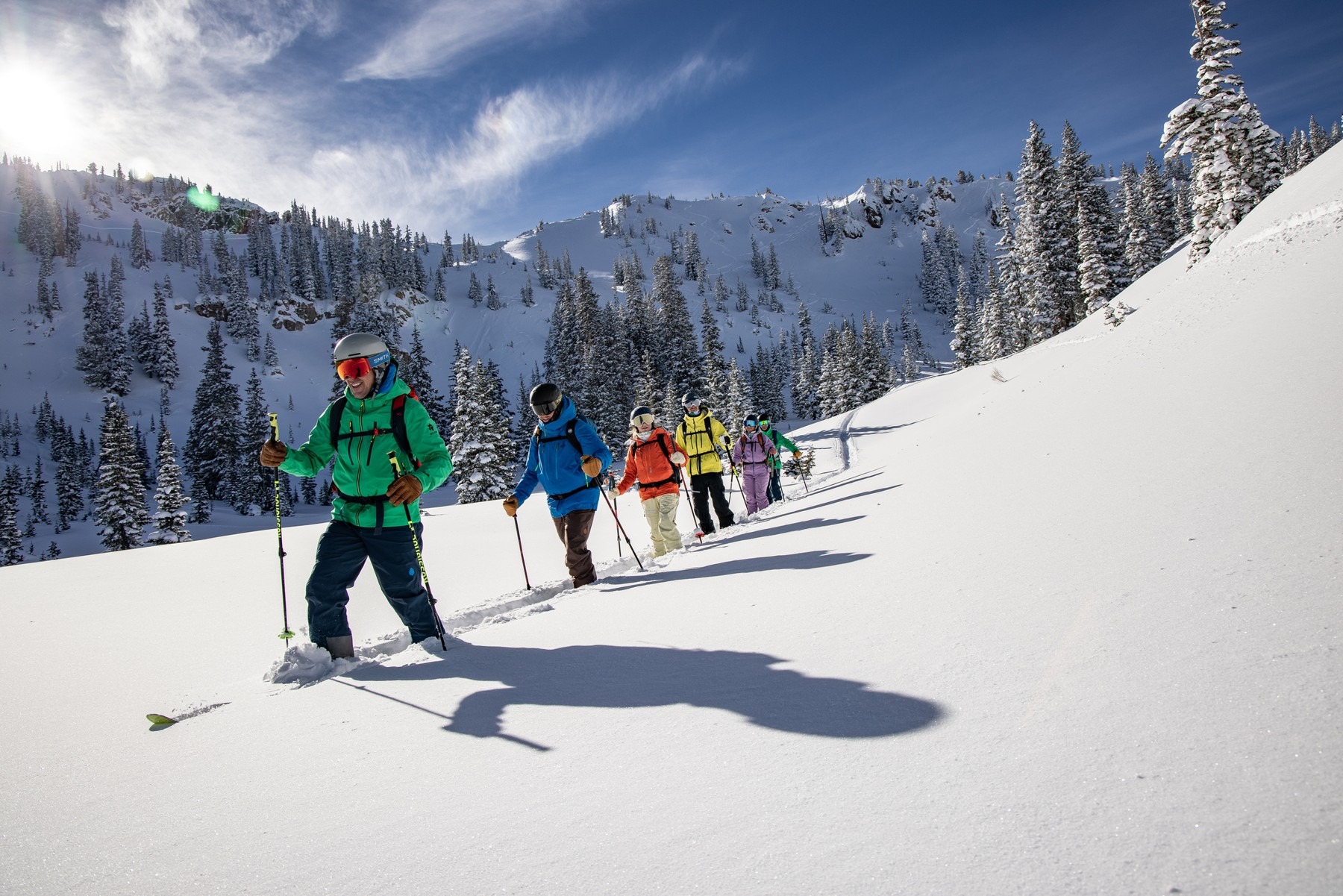
Learn before choosing the objective
Begin with avalanche awareness, then choose appropriate on-snow education and companion-rescue practice. UAC offers education for skiers, splitboarders, and motorized travelers. Match the course to your activity and experience, and ask the provider what preparation is expected. Use the National Avalanche Center’s learning resources to build familiarity with the vocabulary before your course.[2][3]
Prepare every person
For avalanche terrain, each person needs an avalanche transceiver, probe, and metal rescue shovel, plus the ability to use them effectively. Wear and operate the transceiver according to its manufacturer’s instructions, including battery and interference guidance. Practice with your own equipment and partners. Owning the equipment does not make a hazardous objective acceptable.[1]
Build the rest of the pack around the possibility of a delay: warm layers, emergency shelter, first-aid and repair supplies, navigation, lighting, food, water, and a communication plan. Consider what happens if an essential piece of touring equipment breaks far from the trailhead.[1]
Choose partners who communicate
Discuss experience, equipment, pace, concerns, and the day’s forecast before moving. Everyone should be able to speak up and request a change. Agree on regrouping locations that are outside avalanche exposure. Spacing is a travel practice, not permission to enter a slope the group should avoid.[4]
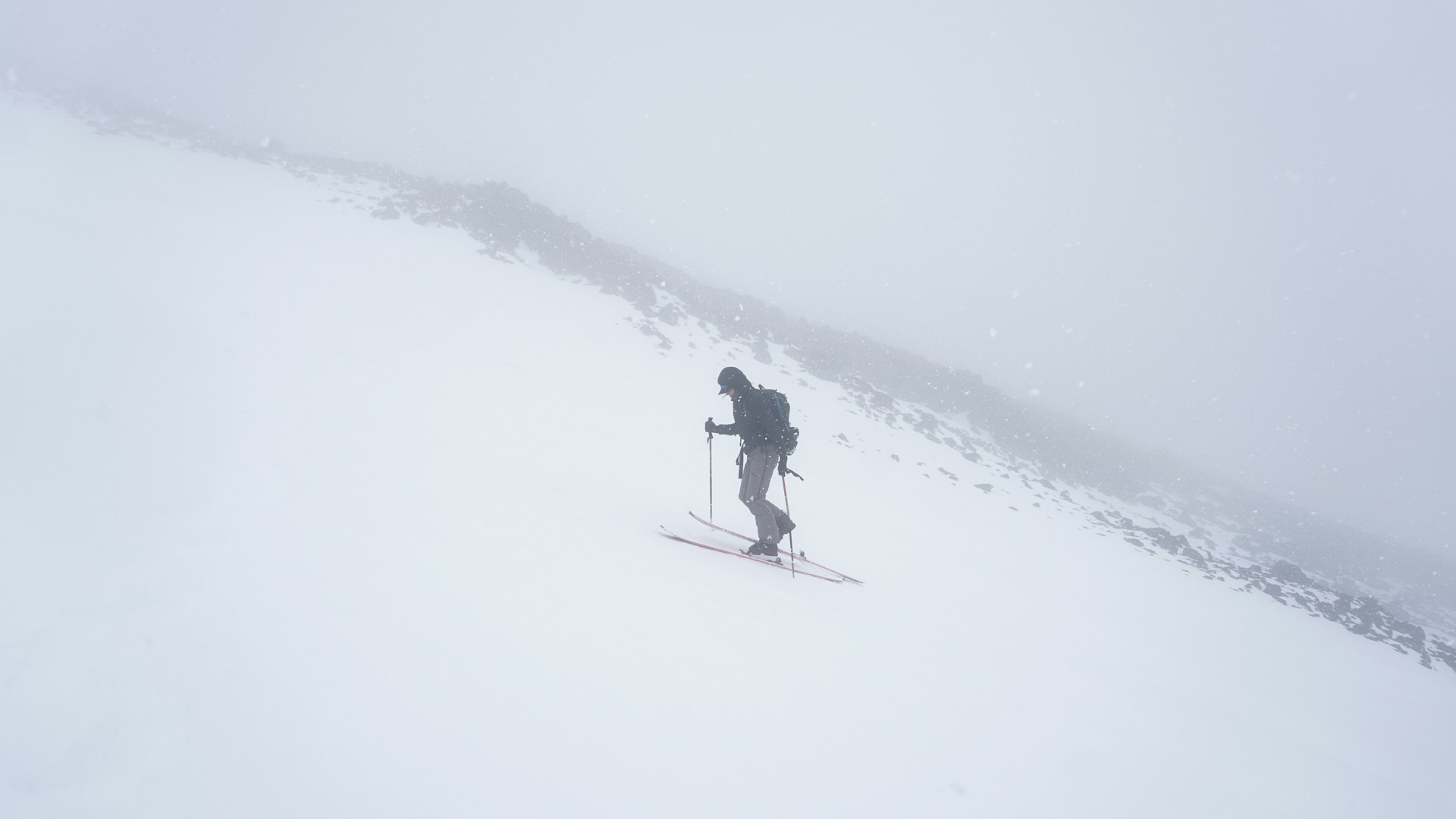
Think beyond the slope under your feet
Avalanches can affect gentler ground below steeper terrain. Examine the terrain above and connected to your route, including gullies and other places where debris could accumulate. A low-angle spot on a mapping app does not establish that the entire route is outside avalanche exposure.[5]
Keep the first outing modest
Make the goal a well-planned day with time to practice transitions, navigate, and communicate. Choose an objective within the group’s actual training and conditions. A qualified guide or instructor can help you develop skills without turning a first tour into a test of how much uncertainty you can tolerate.
Plan your next step
Build the skills. Keep learning.
Use these resources alongside hands-on training, current conditions, and sound decisions in the field.