
Tree Wells & Deep Snow: Keep Your Partner in Sight
A partner at the next lift is too far away to notice a fall into deep snow.
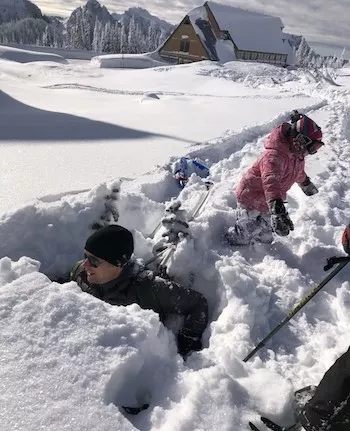
Understand the hidden space around trees
Evergreen branches can keep snowfall from consolidating around the trunk. The resulting tree well may contain loose snow, branches, and empty space hidden beneath the surface. A fall can leave a person inverted or immobilized, with breathing obstructed. Tree-well accidents can occur both inside resorts and in the backcountry.[1]
Deep snow deserves its own decision
NSAA identifies snow immersion suffocation as a hazard of falling into deep, unconsolidated snow. The risk is not limited to an obvious hole beside a tree. Leaving a groomed run changes the conditions you need to manage; strong skiing or snowboarding skills do not remove this hazard.[2]
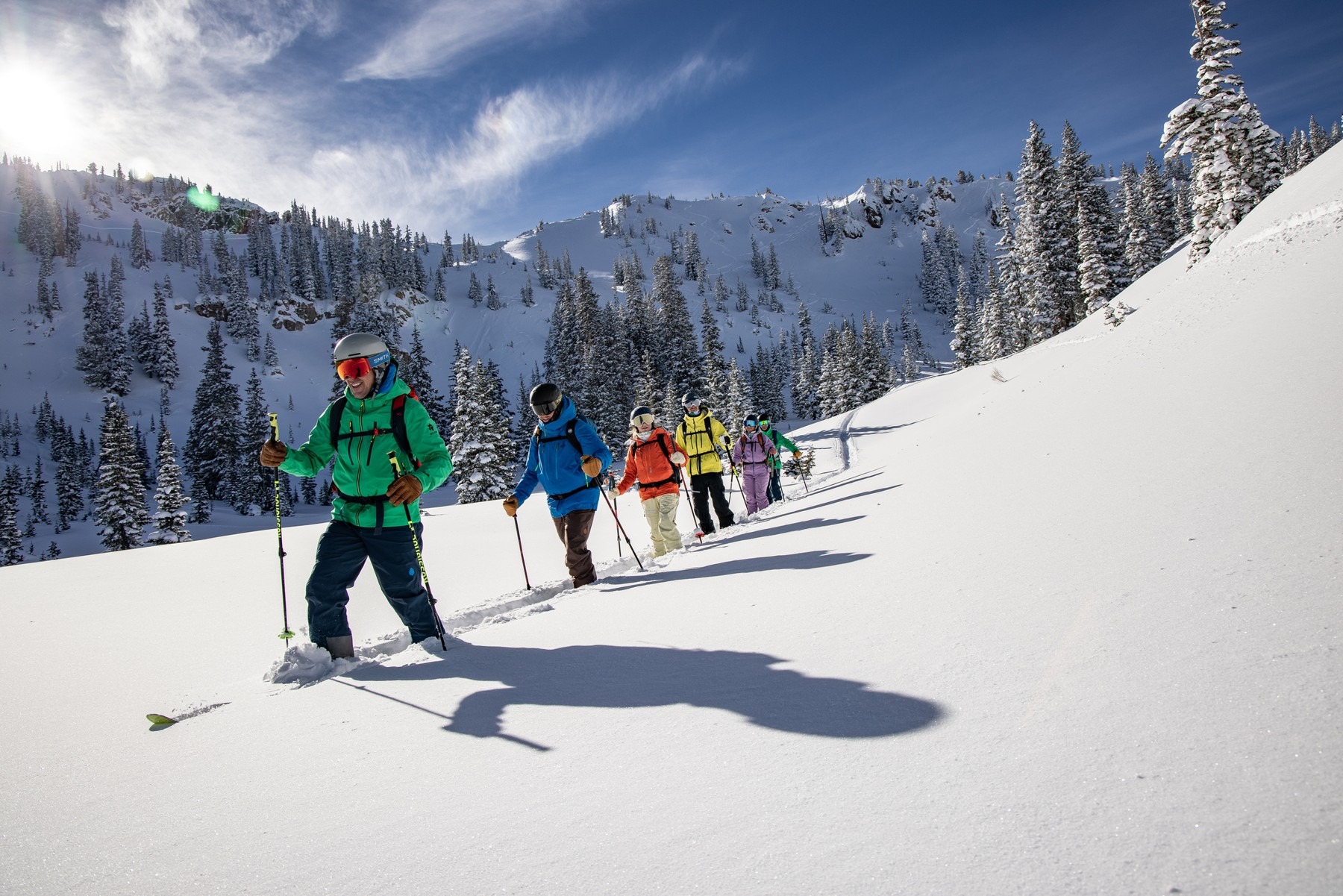
Make the buddy system visible
Choose a line and pace that keep your partner within view and close enough to recognize trouble quickly. Agree on regrouping points before moving. If terrain or visibility prevents you from watching each other, choose a different line. A radio or phone can support communication, but it cannot show you a fall you never saw.[1][2]
Give trees room
Leave a wide margin around trunks and low branches. Avoid treating a gap beside a tree as a convenient turn or stopping spot. Groomed terrain offers a way to avoid the deep-snow and tree-well exposure found off piste. Alta also encourages skiing with a buddy; pair that habit with deliberate line choices.[1][3]
If someone disappears
Treat a suspected immersion as an emergency. Keep track of the last seen location, call patrol or 911, and alert others while avoiding the same hazard. Do not simply continue to the lift expecting your partner to catch up. Review the linked rescue guidance before your day and seek practical instruction; this article focuses on prevention.[1]
Plan your next step
Build the skills. Keep learning.
Use these resources alongside hands-on training, current conditions, and sound decisions in the field.